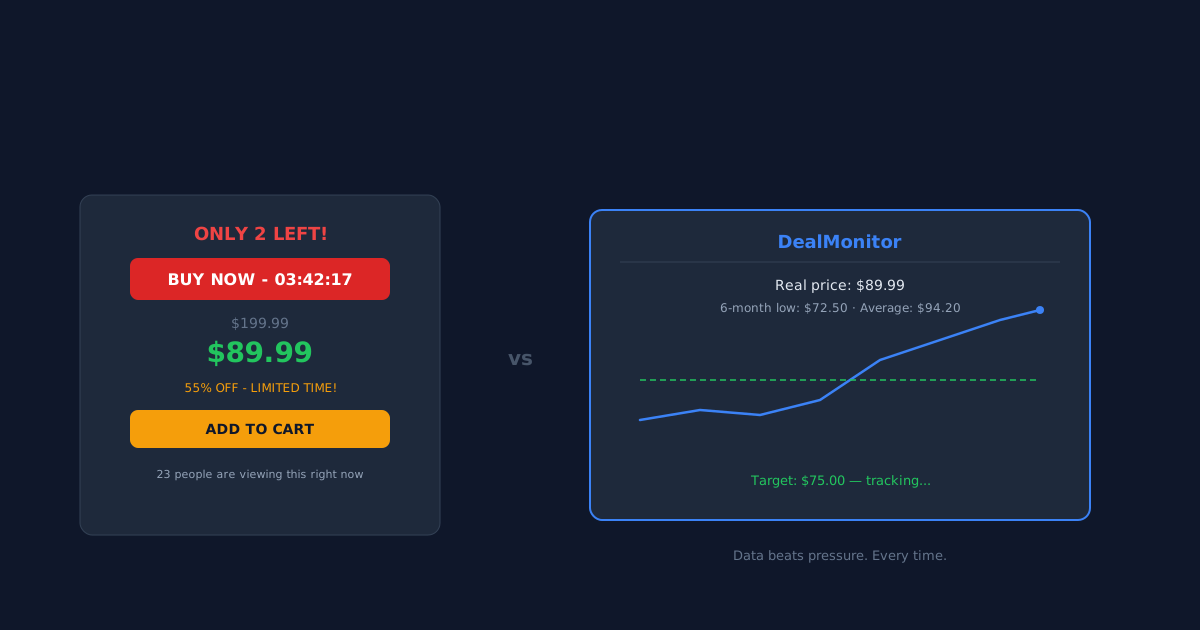
The Buy Button Is Designed to Win
"Only 2 left in stock!" "Sale ends in 03:42:17!" "23 people are viewing this right now!" — Sound familiar? These aren't helpful notifications. They're carefully engineered psychological triggers designed to bypass your rational thinking and push you toward impulse purchases.
The e-commerce industry invests billions into understanding how we make decisions — and how to manipulate those decisions. But once you understand the tricks, you can fight back. Here's how online shops exploit your brain, and how tools like DealMonitor help you reclaim control.
1. The Scarcity Illusion: "Only 3 Left!"
Robert Cialdini's research on persuasion (2009) identified scarcity as one of the six fundamental principles that drive human behavior. We're hardwired to want things more when they appear to be running out — a survival instinct that served us well on the savanna but works against us on Amazon.
A 2022 study in Frontiers in Psychology (Wu et al.) confirmed that limited-time offers and scarcity tactics directly elevate consumer arousal and facilitate impulse buying online. The countdown timer on that product page? It's not informing you — it's pressuring you.
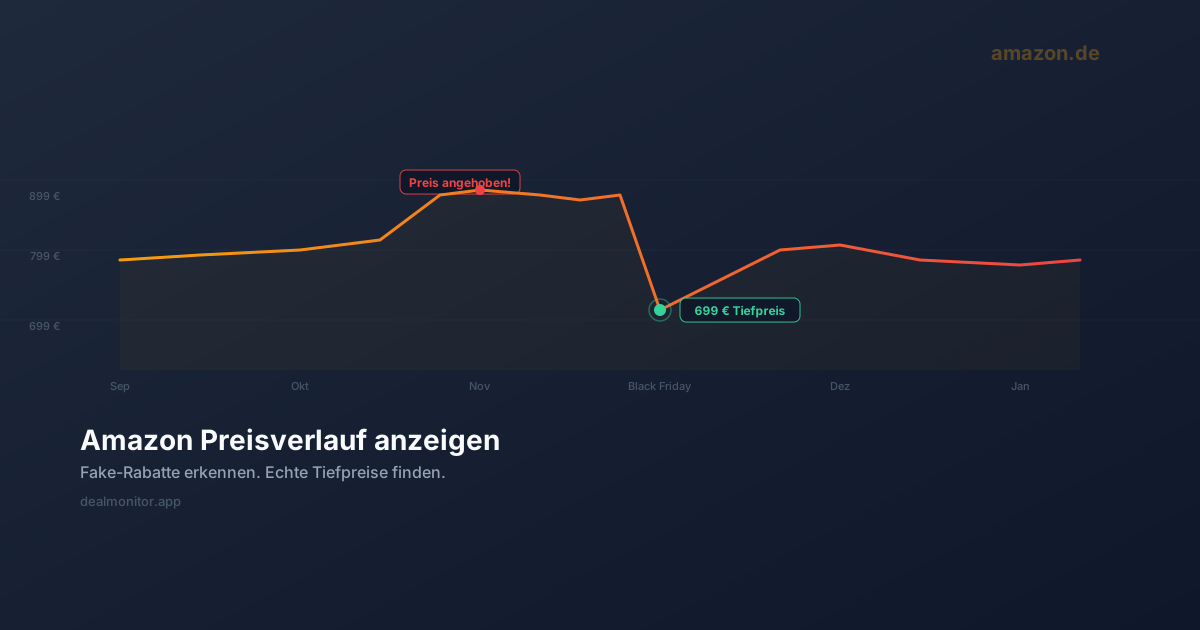
How DealMonitor helps: When you track a product, you see its actual price history over weeks and months. That "limited-time deal" often turns out to be the regular price with a fake deadline attached.
2. The Anchoring Trap: Inflated "Original" Prices
In their groundbreaking 1974 paper in Science, Tversky and Kahneman demonstrated the anchoring effect: our judgments are heavily influenced by the first number we see. When a shop shows you a crossed-out price of $199.99 next to a "sale" price of $89.99, that $199 anchor makes $89.99 feel like a steal — even if the product was never actually sold at $199.
Dan Ariely's research (2003) in the Quarterly Journal of Economics took this further, showing that even completely arbitrary numbers (like a Social Security number!) influence what people are willing to pay. The effect doesn't decrease with experience — it's built into how our brains process numbers.
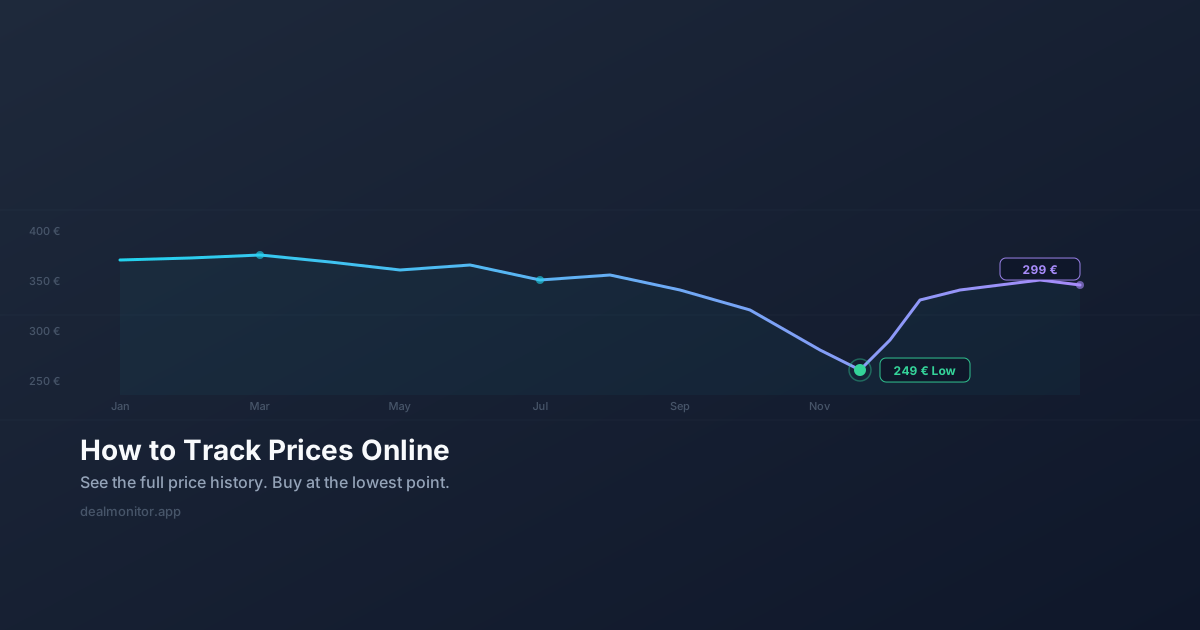
How DealMonitor helps: Our price history chart shows you the real price trajectory. You'll instantly see whether that "70% off" is genuine or whether the shop inflated the original price to make the discount look bigger.
3. Dynamic Pricing: Different Prices for Different People
A landmark 2014 study by Hannak et al. at Northeastern University tested 16 major e-commerce sites and found evidence of price personalization on 9 of them — with prices varying by hundreds of dollars based on user profiles, browsing history, and location.
According to an OECD report (2018), algorithmic pricing can lead to a 4.1% decline in consumer surplus and a 9.6% increase in profits for retailers. Research by Richards et al. (2022) found that 72% of consumers describe personalized pricing as "manipulative and unfair."
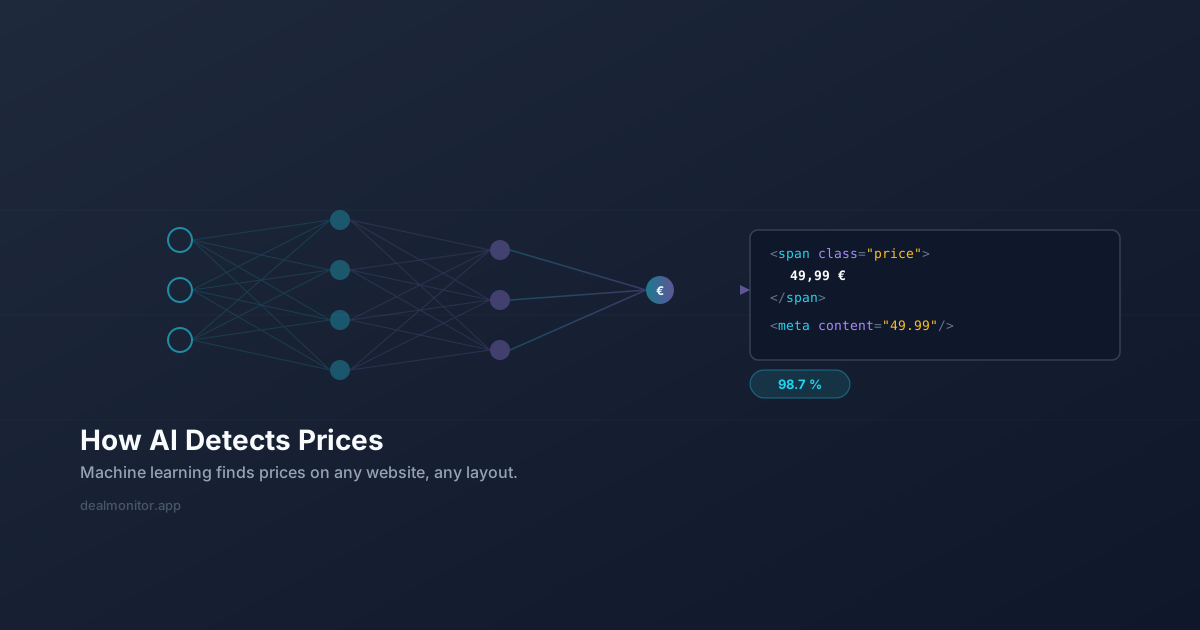
How DealMonitor helps: Our scraper checks prices from a neutral server perspective — no cookies, no browsing history, no personalization. You see the actual price, not the one tailored to your willingness to pay.
4. FOMO: The Fear of Missing Out
Przybylski et al. (2013) defined FOMO as "a pervasive apprehension that others might be having rewarding experiences from which one is absent" — and found it linked to lower life satisfaction and higher reactive behavior. Research shows nearly 60% of millennial consumers have made purchases driven purely by FOMO.
But here's the catch: while FOMO triggers prompt immediate purchases, they frequently generate regret and dissatisfaction afterward. You bought it fast, but did you actually need it?
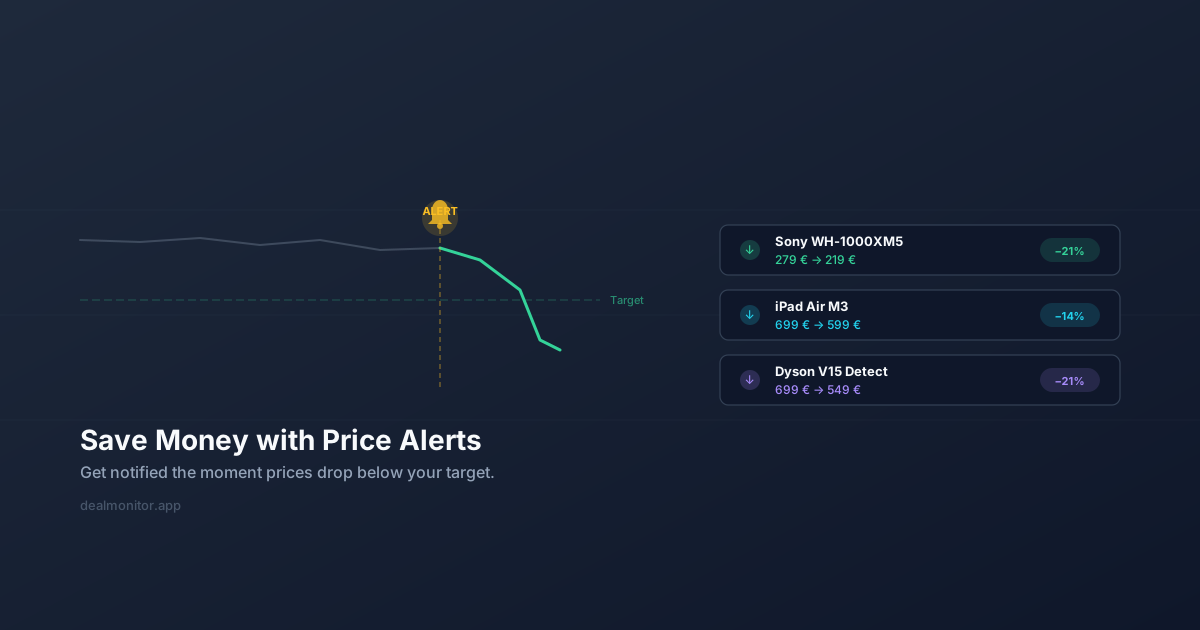
How DealMonitor helps: Set your target price and walk away. DealMonitor monitors the product 24/7 and notifies you when the price actually drops to your desired level. No FOMO — just data-driven decisions.
5. Dark Patterns: Design That Tricks You
A large-scale study by Mathur et al. (2019) at Princeton crawled ~11,000 shopping websites and found 1,818 instances of dark patterns — deceptive design choices that nudge users into unintended actions. They even discovered 22 third-party vendors selling dark patterns as turnkey solutions to online shops.
Luguri & Strahilevitz (2021) found that users exposed to mild dark patterns were 2x as likely to sign up for unwanted services, and aggressive dark patterns made them 4x as likely. Pre-checked boxes, hidden fees revealed only at checkout, confusing cancellation flows — these aren't accidents. They're features.
Consumer Reports estimates hidden fees (drip pricing) cost the average family over $3,200 per year.
How DealMonitor helps: By knowing the real price before you even visit the shop, you're immune to checkout surprises. Track the price, wait for your target, and buy with confidence.
6. The Shopping Cart Trap: Psychological Ownership
The classic endowment effect, demonstrated by Kahneman, Knetsch & Thaler (1990), shows that people overvalue things they already own. In a famous experiment, participants who received coffee mugs demanded roughly twice as much to sell them as non-owners were willing to pay.
Groening et al. (2021) extended this to online wishlists: adding an item to your wishlist creates a sense of "quasi-ownership" that makes you more likely to buy it and less likely to remove it. Every time you check that wishlist, you reinforce the feeling that the item is already "yours."
How DealMonitor helps: Instead of adding items to shopping carts and wishlists (where they psychologically "belong" to you), create a tracker with a specific target price. This shifts your mindset from "I want this" to "I'll buy this when the price is right."
7. Choice Overload: Too Many Options, Bad Decisions
The famous "jam study" by Iyengar & Lepper (2000) showed that consumers presented with 6 options were 10x more likely to buy than those shown 24 options. More choice doesn't mean better decisions — it leads to analysis paralysis and, ultimately, impulse purchases just to end the suffering.
Add decision fatigue (Baumeister et al., 1998) to the mix: after browsing dozens of product pages, your willpower is depleted. That's exactly when you're most vulnerable to the "just buy it" impulse.
How DealMonitor helps: Find the product you want, set your price, and stop browsing. DealMonitor eliminates the need to constantly check and compare — reducing decision fatigue and impulse buying.
Pro Tips: Getting the Most Out of Price Tracking
Track everything — from games to islands
DealMonitor works with virtually any online shop. Track video games on Steam, electronics on Amazon, sneakers from your favorite brand, a used car on mobile.de — or even private islands. If it has a price on a webpage, you can track it.
The one-cent trick: Never miss a price drop
Not sure what price you'd be happy with? Set your target price to one cent below the current price. This way, you'll get notified about every single price drop, no matter how small. It's like having a personal price radar.
Track seasonal patterns
Many products follow predictable pricing cycles. Video games drop during Steam sales, electronics get cheaper after new models launch, fashion goes on sale at the end of each season. With DealMonitor's price history, you'll learn when your favorite shops typically offer the best deals — and time your purchases accordingly.
Use the browser extension for instant tracking
See something interesting while browsing? Our browser extension lets you create a tracker in seconds — right from the product page. No need to copy URLs or switch tabs.
Combine email, Telegram, and push notifications
Set up multiple notification channels so you never miss a price drop. Enable Telegram for instant alerts on your phone, email for a detailed summary, and web push for desktop notifications.
The Bottom Line
Online shops spend billions engineering the perfect buy button. They exploit scarcity bias, anchoring, FOMO, dark patterns, and psychological ownership to make you buy more, faster, and at higher prices than you should.
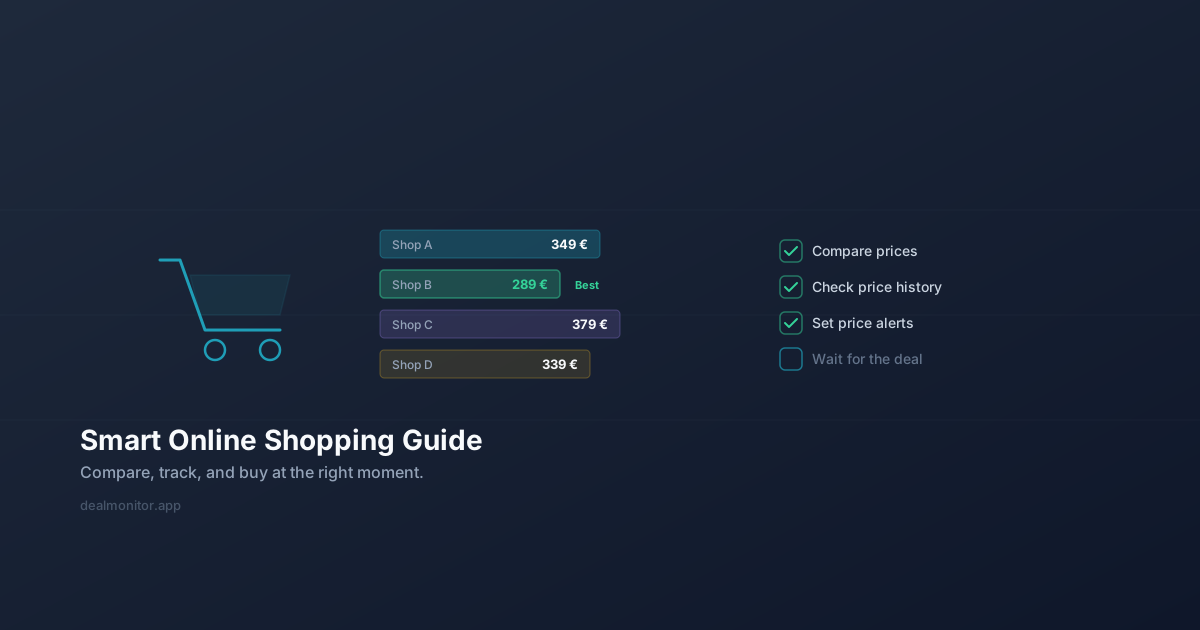
A price tracker is your antidote. It replaces emotional pressure with cold, hard data. It turns "Buy now before it's too late!" into "The price has been stable for 3 months — I'll wait for the next sale."
Stop satisfying the buy button. Start tracking prices.